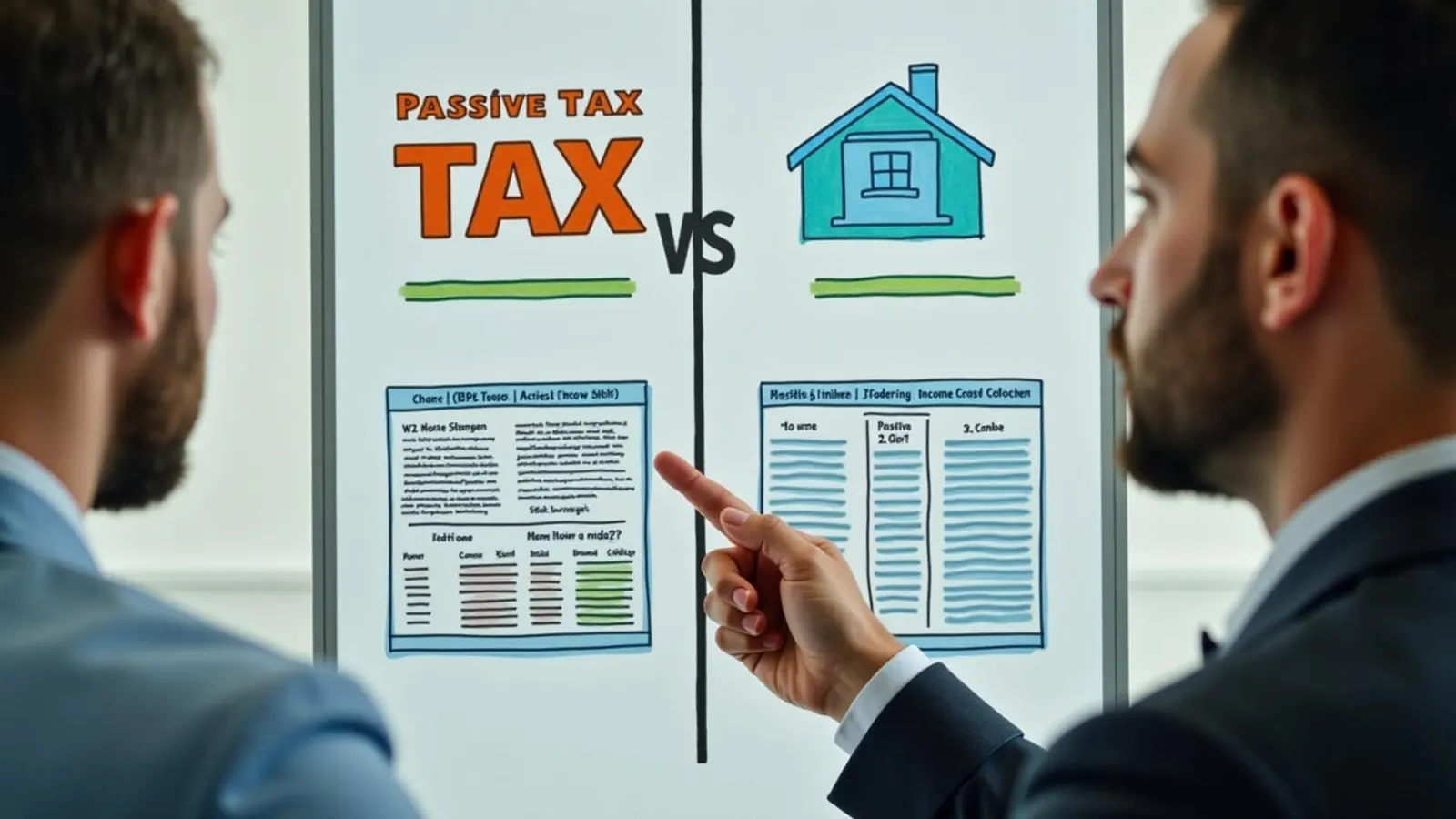
Why Income Classification Matters
The IRS treats income differently based on how you earn it. Understanding these categories is essential because:
- Passive losses can only offset passive income (with limited exceptions)
- Active losses can offset any income
- Different income types face different tax rates
Poor planning around these rules leaves thousands in deductions unused.
The Three Categories of Income
1. Active (Ordinary) Income
Income from work or business activities where you materially participate:
- W-2 wages and salaries
- Self-employment income
- Business income with material participation
- Guaranteed payments from partnerships
2. Passive Income
Income from activities where you don't materially participate:
- Rental real estate (default treatment)
- Limited partnership interests
- S-corp/partnership income without material participation
3. Portfolio Income
Income from investments:
- Interest
- Dividends
- Capital gains
The Passive Activity Loss Rules
The passive activity loss (PAL) rules create the biggest planning challenges:
The Basic Rule:Passive losses can only deduct against passive income. Excess losses are suspended and carried forward.
Example:- W-2 income: $300,000
- Rental loss: ($50,000)
- Without planning: $50,000 loss suspended
- Tax impact: $0 current benefit
Exceptions to the PAL Rules
1. Active Participation Exception ($25,000)
If you "actively participate" (a lower bar than material participation), you can deduct up to $25,000 in rental losses against active income.
Phase-out: Starts at $100,000 AGI, eliminated at $150,000 AGIMost high-income earners exceed this phase-out.
2. Real Estate Professional Exception
REPs can treat rental losses as non-passive, deducting against any income. See our dedicated article.
3. Disposition of Activity
When you sell or dispose of a passive activity, all suspended losses become deductible.
Planning tip: Bundling sales can trigger significant loss releases.Material Participation Tests
You materially participate if you meet ANY of these tests:
- 500+ hours in the activity during the year
- Substantially all participation in the activity
- 100+ hours and no one else participates more
- Significant participation activities totaling 500+ hours
- Material participation in 5 of last 10 years
- Personal service activity with participation in any 3 prior years
- Facts and circumstances showing regular, continuous, substantial involvement
Strategic Planning Opportunities
Grouping Elections
You can elect to group activities into a single activity for material participation purposes. This is critical for:
- Real estate investors with multiple properties
- Business owners with related ventures
Once made, grouping elections are generally irrevocable.
Recharacterization Strategies
Convert passive income to active (or vice versa) through:
- Increasing participation in passive activities
- Proper entity structuring
- Management company arrangements
Loss Harvesting
Create passive income to absorb suspended losses:
- Sell appreciated passive investments
- Generate passive income through new investments
- Time dispositions strategically
Common Mistakes
- Ignoring grouping elections: Missing the election wastes deductions
- Poor documentation: Can't prove material participation
- Misclassifying income: Treating passive as active or vice versa
- Not tracking suspended losses: Losing track of carryforwards
- Missing the REP opportunity: Not exploring qualification
The Bottom Line
Income classification dramatically affects your tax liability. Proper planning can convert unusable passive losses into valuable active deductions.
Schedule a consultation to review your situation and develop strategies to maximize your deductions.